Storm Damage Roof Claims in Greenville, SC: A Homeowner's Step-by-Step Guide
Storm Damage Roof Claims in Greenville, SC: A Homeowner's Step-by-Step Guide
Wind or hail hit your roof — now what? The right moves in the first 48 to 72 hours protect both your home and your insurance claim. This guide walks Upstate South Carolina homeowners through every step, from the moment the storm passes to the day your roof is finished.
Why Upstate SC Homeowners Face This More Than They Expect
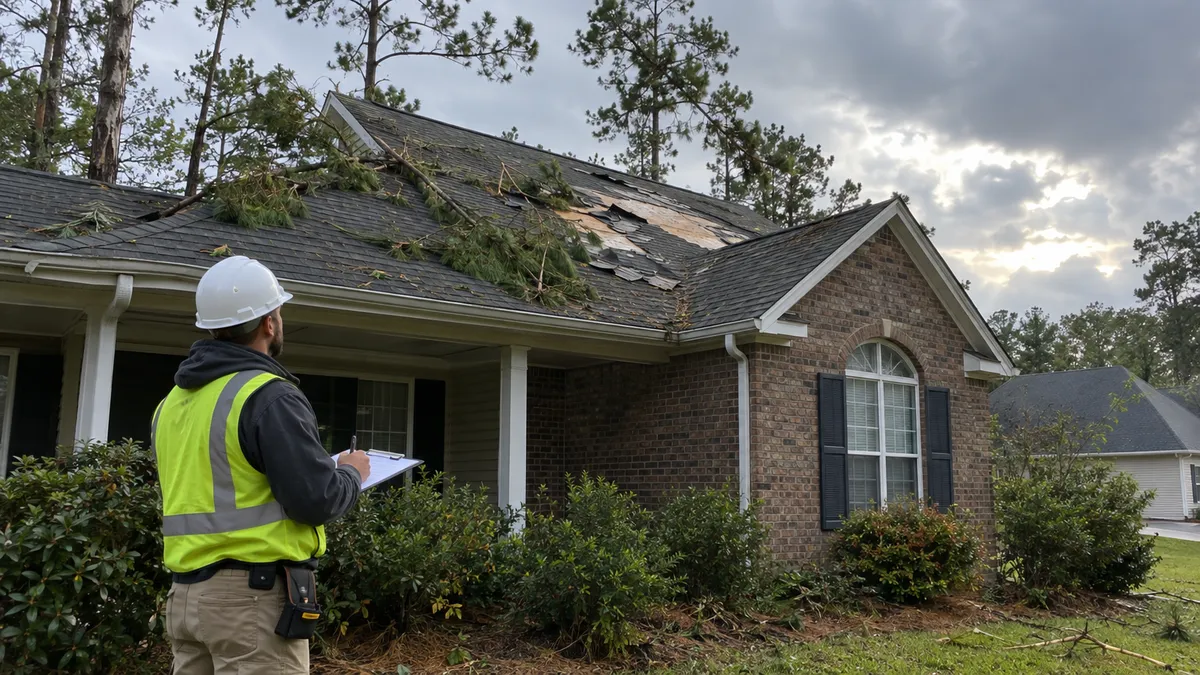
The Upstate isn't immune to serious storms. Greenville County sees one-to-two-inch hail some years, with Taylors, Greer, and Travelers Rest among the communities that have documented hail days. High winds during spring and summer thunderstorms routinely knock pine limbs onto roofs across subdivisions in Simpsonville, Five Forks, Mauldin, and surrounding areas.
Many of those same neighborhoods were built between 2000 and 2008. If your home is in one of them, your original builder-grade shingle roof may now be 17 to 25 years old — meaning one significant storm can push it from "aging" to "needs replacement." That makes knowing the claims process more important than ever.
Add to that the fact that many South Carolina carriers have tightened their coverage rules in recent years. Some now pay only actual cash value — the depreciated worth of your roof — on roofs that are 15 years or older. Others require an inspection before renewal. Knowing what your policy says before a storm hits puts you in a much stronger position.
What Should You Do Immediately After a Storm?
Stay safe first. Don't walk your roof. Once the storm has fully passed, do a careful ground-level inspection and check your attic. Here's what to look for:
- Missing or visibly lifted shingles — look along ridges, hips, and valleys
- Granules in the gutters or downspouts — a sign of shingle impact damage
- Dented or cracked gutters and flashing — hail hits metal just as hard as shingles
- Fallen branches on the roof surface — tall pines are common in the Upstate and they fall hard
- Water stains or dripping in the attic — indicates an active breach
Photograph everything from the ground, from multiple angles, and from inside the attic. The more documentation you have before an adjuster arrives, the better positioned you are.
How Do You Protect Your Home Before Repairs Start?
Your homeowners policy includes what's called a duty to mitigate. That means you're required to take reasonable steps to prevent further damage after a storm — and failing to do so can give your insurer grounds to reduce or deny part of your claim.
Practical steps:
- Cover exposed or damaged roof sections with a heavy-duty tarp, weighted and secured at the edges
- Move any wet or salvageable belongings out of affected interior areas
- Keep receipts for any materials or emergency services you use — these costs are often reimbursable when documented
Don't make permanent repairs before the adjuster has seen the damage. Temporary protection is expected and appropriate. Permanent repairs done before documentation can complicate your claim.
When Should You Call Your Insurance Company?
Call as soon as reasonably possible — ideally within 24 to 72 hours of the storm. Most South Carolina homeowners policies require prompt notification of damage. While state law generally allows up to one year from the date of loss to file a wind or hail claim, early reporting establishes a clear timeline and protects your coverage rights. Waiting months can give a carrier grounds to question whether the damage is truly storm-related or the result of ongoing wear.
When you call, have your policy number ready. Ask your insurer:
- What is my wind or hail deductible? (It may be different from your standard deductible.)
- Does my policy pay actual cash value or replacement cost value?
- How long do I have to file, and when can I expect an adjuster?
Always confirm your coverage directly with your insurance agent. Policy terms vary — this guide provides general information, not insurance advice specific to your policy.
What's the Difference Between ACV and RCV Coverage?
This is one of the most important questions Upstate homeowners overlook until it's too late.
Replacement Cost Value (RCV) pays what it costs today to replace your damaged roof with comparable materials, minus your deductible. This is the coverage most homeowners want.
Actual Cash Value (ACV) pays the depreciated value of your roof — what it was worth at the time of the storm, factoring in age and wear. On a 20-year-old roof, that payout can be significantly less than what a new roof costs, leaving a large gap you cover out of pocket.
Many South Carolina carriers now apply ACV-only terms to roofs that are 15 years or older, or to roofs in certain condition categories. Check your declarations page and look for the words "ACV" or "replacement cost" in the dwelling coverage section. If you're unsure, call your agent and ask directly before the next storm arrives.
Should You Have a Contractor Present During the Adjuster's Inspection?
Yes — and this is one of the most practical steps you can take to protect your claim. The adjuster's initial scope of damage becomes the starting point for your settlement. Homeowners who go through that inspection alone routinely have items left out: individual slopes, code-upgrade requirements, damaged flashing, or interior water damage that wasn't on the adjuster's list.
Having a knowledgeable roofing contractor walk the roof alongside the adjuster ensures that visible damage is documented in real time and that nothing is overlooked. If the adjuster's estimate seems low or incomplete, you have the right to request a re-inspection. Document your contractor's findings in writing before that meeting so you have an independent record.
What About Storm Chasers?
After significant storms, out-of-town contractors flood areas like Greenville and Greer offering fast inspections and guaranteed claim approvals. These companies — sometimes called storm chasers — often disappear after collecting payment, leaving homeowners with substandard work or unfinished repairs.
Protect yourself:
- Verify that any contractor holds a valid South Carolina state roofing license (the SC Labor, Licensing and Regulation website is the place to check)
- Ask for local references and a physical business address
- Never pay the full amount upfront or sign over your insurance benefits to a contractor
- Be skeptical of anyone who guarantees your claim will be approved — no contractor can promise that
Working with a licensed, local contractor who has a track record in your community is always the safer choice.
How Douglas Constructors Helps Greenville Homeowners Through the Claims Process
At Douglas Constructors, we've helped homeowners across Greenville, Greer, Simpsonville, Mauldin, and the surrounding Upstate navigate storm damage repairs and the insurance process that goes with them. We offer free inspections, provide written documentation of what we find, and can be present when your adjuster comes out — so you have a knowledgeable set of eyes on your side during that critical walk-through.
We're licensed, insured, and based right here in Greer at 506 N Main St. We're not going anywhere after the job is done. Built right the first time.
Frequently Asked Questions
How long do I have to file a storm damage claim in South Carolina?
Most South Carolina homeowners policies allow up to one year from the date of the storm to file a wind or hail claim, though some policies have shorter windows. Regardless of the deadline, you should notify your insurer as soon as possible — ideally within 24 to 72 hours. Late reporting can complicate a claim even when the damage is legitimate. Always review your specific policy language and confirm deadlines with your insurance agent.
Will my insurance cover a full roof replacement after hail damage?
It depends on your coverage type and the extent of the damage. If you have replacement cost value coverage and the adjuster confirms functional damage to the roof, your policy may cover a full replacement minus your deductible. If you have actual cash value coverage — which is increasingly common on older roofs in South Carolina — the payout will reflect depreciation. Review your policy before a storm rather than after, so you understand what to expect.
What if the insurance adjuster's estimate doesn't cover the full repair cost?
You have options. First, have your roofing contractor review the adjuster's scope line by line and identify anything that was missed. You can request a re-inspection if items were overlooked. If there's still a significant gap, you can file a supplemental claim for damage discovered during the repair process, or consult a licensed public adjuster who works exclusively on your behalf. Document everything in writing throughout the process.
Ready to get a clear picture of your roof's condition? Call Douglas Constructors at (864) 444-6032 or request a free inspection at douglasconstructors.com/contact. We serve Greenville, Greer, Simpsonville, Mauldin, Spartanburg, Anderson, and the surrounding Upstate.
Related: Residential Roofing Services | Commercial Roofing Services
